
Ski Boot Size Chart & Mondopoint Conversion Guide
Finding the correct ski boot size starts with understanding Mondopoint sizing. Unlike regular shoe sizing, ski boots are measured according to the length of your foot in centimeters. Use the ski boot size chart below to compare foot length, US shoe size, and Mondopoint size, then learn how ski boot width, last, flex, and overall fit affect which boot is right for you.
Find Your Mondo Size
Measure your foot in centimeters and use the size chart to find your starting Mondopoint ski boot size.
Check Your Boot Width
Compare your foot shape with Low Volume, Medium Volume, and High Volume ski boot lasts.
Choose the Right Flex
Match ski boot stiffness to your ability, weight, skiing style, and performance preferences.
Ski Boot Size Chart
Mondopoint sizing corresponds closely to the length of your foot in centimeters. For example, a foot measuring approximately 26 centimeters will generally begin around a 26.0 or 26.5 Mondopoint ski boot. Use the chart below as a general conversion between foot length, US men's and women's shoe sizes, and ski boot Mondopoint size.
| Foot Length (cm) | US Men's Shoe Size | US Women's Shoe Size | Ski Boot Mondo Size |
|---|---|---|---|
| 14.0 - 14.5 | 7.0 Kids | - | 14.5 |
| 15.0 - 15.5 | 8.0 Kids | - | 15.5 |
| 16.0 - 16.5 | 9.0 Kids | - | 16.5 |
| 17.0 - 17.5 | 10-11 Kids | - | 17.5 |
| 18.0 - 18.5 | 12-12.5 Kids | - | 18.5 |
| 19.0 - 19.5 | 13 Kids | - | 19.5 |
| 20.0 - 20.5 | 13.5 Kids / 1 | - | 20.5 |
| 21.0 - 21.5 | - | 4.0 - 4.5 | 21.5 |
| 22.0 - 22.5 | - | 5.0 - 5.5 | 22.5 |
| 23.0 - 23.5 | 5.0 - 5.5 | 6.0 - 6.5 | 23.5 |
| 24.0 - 24.5 | 6.0 - 6.5 | 7.0 - 7.5 | 24.5 |
| 25.0 - 25.5 | 7.0 - 7.5 | 8.0 - 8.5 | 25.5 |
| 26.0 - 26.5 | 8.0 - 8.5 | 9.0 - 9.5 | 26.5 |
| 27.0 - 27.5 | 9.0 - 9.5 | 10.0 - 10.5 | 27.5 |
| 28.0 - 28.5 | 10.0 - 10.5 | 11.0 - 11.5 | 28.5 |
| 29.0 - 29.5 | 11.0 - 11.5 | - | 29.5 |
| 30.0 - 30.5 | 12.0 - 12.5 | - | 30.5 |
| 31.0 - 31.5 | 13.0 - 13.5 | - | 31.5 |
| 32.0 - 32.5 | 14.0 - 14.5 | - | 32.5 |
How to Measure Your Foot for Ski Boots
Because Mondopoint is based on foot length, measuring your foot is one of the best ways to estimate your starting ski boot size. Measure both feet and use the larger measurement when comparing your foot to a ski boot size chart.
Place Your Heel Against a Wall
Stand on a piece of paper with your heel lightly touching a wall. Wear the type of thin ski sock you normally plan to use.
Measure Your Foot Length
Measure from the wall to the end of your longest toe. Record the measurement in centimeters.
Compare to Mondopoint
Use that centimeter measurement as your starting Mondopoint size, then consider your foot width, volume, skiing ability, and preferred fit.
Do Ski Boots Come in Half Sizes?
Ski boots are commonly labeled in both whole and half Mondopoint sizes, such as 25.0 and 25.5. However, most alpine ski boots use the same plastic shell for the whole and half size within each size range. For example, a 25.0 and 25.5 will typically share the same shell.
Depending on the manufacturer and model, differences between the whole and half size may come from the liner, footbed, or other internal components rather than a different shell length. Many of the ski boots available at Suburban Ski & Bike are therefore listed using the .5 size within each shared shell size.
Ski Boot Width & Last Chart
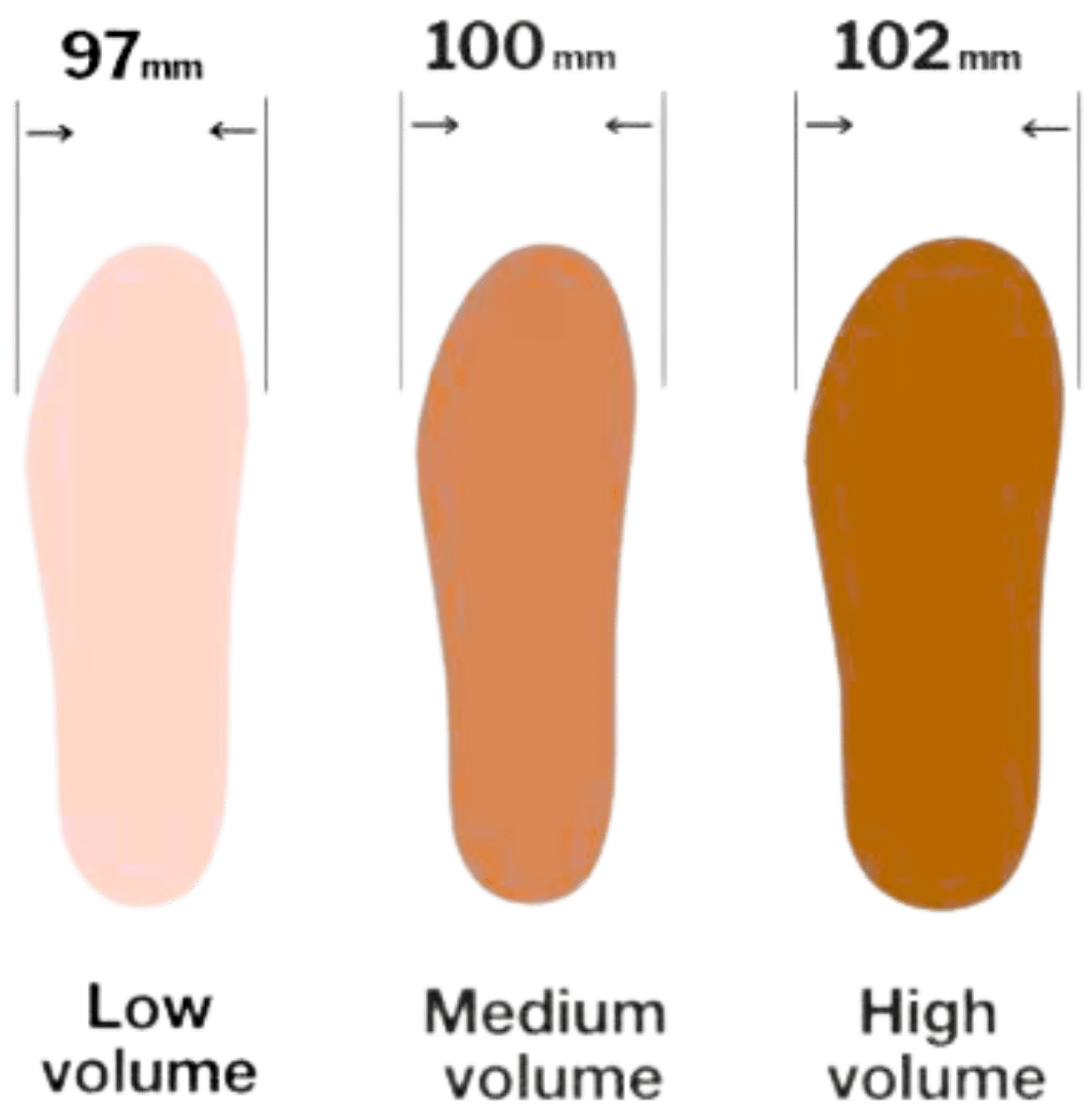
Ski boot width is commonly described by the boot's last. The last is measured in millimeters across the widest part of the forefoot. Ski boots are generally grouped into Low Volume (LV), Medium Volume (MV), and High Volume (HV) categories, although exact measurements and overall fit vary between manufacturers.
| Boot Last | Volume | Typical Fit | Best For |
|---|---|---|---|
| 98mm & Below | Low Volume (LV) | Narrow | Narrower feet or skiers seeking a close, precise fit |
| 99-101mm | Medium Volume (MV) | Medium | Average-width feet and a wide range of skiers |
| 102mm & Above | High Volume (HV) | Wide | Wider feet or skiers needing additional interior volume |
Narrow / Low Volume Ski Boots
Low-volume ski boots generally use a last around 98mm or narrower and are designed for skiers with slimmer or lower-volume feet. Their closer fit can also provide the precise response preferred by many advanced and performance-oriented skiers.
Medium / Medium Volume Ski Boots
Medium-volume ski boots typically fall around 99-101mm and fit a broad range of average foot shapes. They balance comfort, support, and performance for recreational through advanced skiers.
Wide / High Volume Ski Boots
High-volume ski boots generally use a last of approximately 102mm or wider and provide additional room through the forefoot and overall shell. They are often a better starting point for wider or higher-volume feet.
Last width is only one part of ski boot fit. Instep height, heel shape, ankle volume, liner construction, shell shape, and sizing all affect how a boot feels. Two boots with the same stated last can still fit noticeably differently.
Ski Boot Flex Chart
Ski boot flex describes how much resistance the cuff provides as the skier flexes forward. Higher flex numbers generally indicate a stiffer and more supportive boot, while lower numbers indicate a softer and more forgiving boot.
| Flex Range | General Feel | Typical Skier |
|---|---|---|
| 70-90 | Soft / Forgiving | Beginners, lighter skiers, and comfort-focused skiers |
| 90-110 | Medium / Balanced | Intermediate through advanced recreational skiers |
| 110-130+ | Stiff / Powerful | Advanced and expert skiers, aggressive skiers, and racers |
Ability level is not the only factor when choosing ski boot flex. Skier weight, strength, technique, speed, terrain, and personal preference all matter. A heavier or more aggressive intermediate skier may prefer a stiffer boot, while a lighter advanced skier may be better suited to a somewhat softer flex.
How Should Ski Boots Fit?
A properly sized ski boot should feel snug and secure throughout the foot without painful pressure points. Ski boots should generally fit closer than everyday footwear because excess room can allow the foot and heel to move inside the shell, reducing control and precision.
When first putting on a correctly sized ski boot, your toes may lightly touch the front of the liner while standing upright. As you flex forward into a skiing position, your heel should move securely into the heel pocket and the pressure at the toes will often decrease.
Ski boot liners also compress and become roomier with use. A boot that feels exceptionally roomy when it is brand new can become too large after several days of skiing.
Ski Boot Sizing Questions
How do I know my ski boot size?
Measure the length of your foot in centimeters from the heel to the end of your longest toe. That measurement provides your starting Mondopoint size. For example, a foot measuring approximately 27 centimeters will generally begin around a 27 Mondopoint ski boot. Because ski boot fit varies by model and foot shape, this measurement should be treated as a starting point rather than a guaranteed final size.
What is Mondopoint sizing?
Mondopoint is the sizing system commonly used for ski boots and is based on the length of your foot in centimeters. A 26.5 Mondopoint ski boot, for example, corresponds approximately to a foot measuring 26.5 centimeters. Unlike US shoe sizing, Mondopoint sizing itself is not separated into men's and women's sizes.
Are ski boot sizes the same as shoe sizes?
No. Ski boots use Mondopoint sizing rather than standard US shoe sizing. Your normal shoe size can provide a rough reference, but measuring your foot in centimeters is a better starting point because everyday shoe sizing can vary considerably between brands.
Should I size up or down in ski boots?
You generally should not size up simply to make a ski boot feel like an everyday shoe. Ski boots are designed to fit closely so the foot and heel remain secure inside the shell. The correct size depends on your foot shape, skiing ability, desired performance, and the specific boot model. Skiers seeking a more performance-oriented fit may choose a closer fit than skiers who prioritize comfort.
How do I know if my ski boots are too big?
Signs that a ski boot may be too large include excessive heel lift, your foot sliding inside the boot, needing to overtighten the buckles, or having significant extra room around the foot. Ski boot liners also compress with use, so a boot that already feels loose when new may become even roomier after several days of skiing.
What does ski boot last mean?
Ski boot last refers to the width of the boot across the forefoot and is usually measured in millimeters. Lower last numbers generally indicate a narrower or lower-volume fit, while higher numbers generally indicate a wider or higher-volume fit. Last width is only one part of fit, so heel shape, instep height, ankle volume, and overall shell shape should also be considered.
Shop Ski Boots
Once you have a better idea of your size, width, and preferred flex, browse available ski boots and filter by the specifications that fit your needs.
Shop Ski Boots